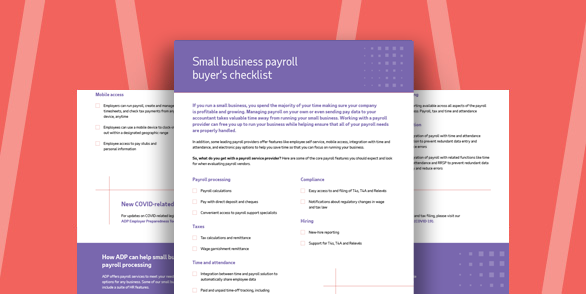
Running a business means wearing a lot of hats, and managing small business payroll is one of the most important. Whether you're hiring your first employee, setting up payroll for the first time or trying to keep up with changing compliance requirements, getting payroll right can feel overwhelming.
From Spark to Strategy: The Payroll Toolkit is a free resource designed to help Canadian small business owners build confidence in payroll, compliance and workforce management. Inside, you'll find practical guidance, expert insights and real-world advice to help you pay your people accurately, stay compliant and support your business as it grows.
Because every paycheque is more than a transaction. It's a promise to your employees and a foundation for building trust, stability and long-term success.
Inside, you'll learn how to:
- Set up payroll for your small business, from Canada Revenue Agency (CRA) registration to your first payday
- Understand the true cost of an employee, beyond wages alone
- Stay compliant with Canadian payroll requirements, from remittances to recordkeeping
- Manage payroll as your business grows, across roles, locations and provinces
- Handle common payroll challenges, before they become bigger issues
- Use technology to simplify payroll, save time and reduce errors
Not sure where to begin?
You're not alone. Here are some common questions Canadian small business owners ask:
- How do I set up payroll for a new business in Canada?
- What employer contributions am I responsible for beyond wages?
- How do I stay compliant with payroll rules and tax requirements?
- When is the right time to outsource payroll or invest in payroll technology?
- What changes when I hire employees in another province?
If you're ready to build a stronger payroll process, reduce administrative stress and spend more time growing your business, download From Spark to Strategy: The Payroll Toolkit and take your next step with confidence.
How do I set up payroll for a small business in Canada?
Before paying employees, you need to register for a CRA payroll account, collect employee information such as TD1 forms and Social Insurance Numbers, establish a pay schedule, and determine how you'll calculate and remit payroll deductions. Creating a payroll calendar and documenting your payroll policies can help you stay organized from the start. The Payroll Toolkit provides a step-by-step guide to help Canadian small business owners build a strong payroll foundation.
What are the biggest payroll compliance mistakes small businesses make?
Many payroll compliance issues stem from missing remittance deadlines, failing to maintain complete payroll records, overlooking provincial employment standards and not keeping up with changing payroll requirements. Small businesses must accurately calculate and remit payroll deductions, file required tax forms on time and retain payroll records for the required period. The Payroll Toolkit explains the key compliance requirements and practical steps that can help employers stay organized and meet their payroll obligations with confidence.
When should a small business use payroll software or outsource payroll?
Many small business owners start managing payroll manually, but payroll often becomes more complex as a business grows. Hiring more employees, expanding into multiple provinces, managing time tracking, and keeping up with changing regulations can all increase administrative demands. Payroll software and payroll service providers can help save time, improve accuracy, and simplify compliance. The Payroll Toolkit explores what to consider when evaluating payroll technology and support options.
How much does payroll cost for a small business in Canada?
The cost of an employee extends beyond wages. Employers may also be responsible for CPP contributions, EI premiums, workers' compensation costs, vacation pay and other payroll-related expenses. The Payroll Toolkit explains the key payroll costs Canadian small businesses should plan for before hiring.
This article offers practical information concerning the subject matter and is provided with the understanding that ADP is not rendering legal or tax advice or other professional services.